


Part Five – Reflection on Mass Tourism in Bali with Toyo University Students
Day Nine Activities – September 10, 2024
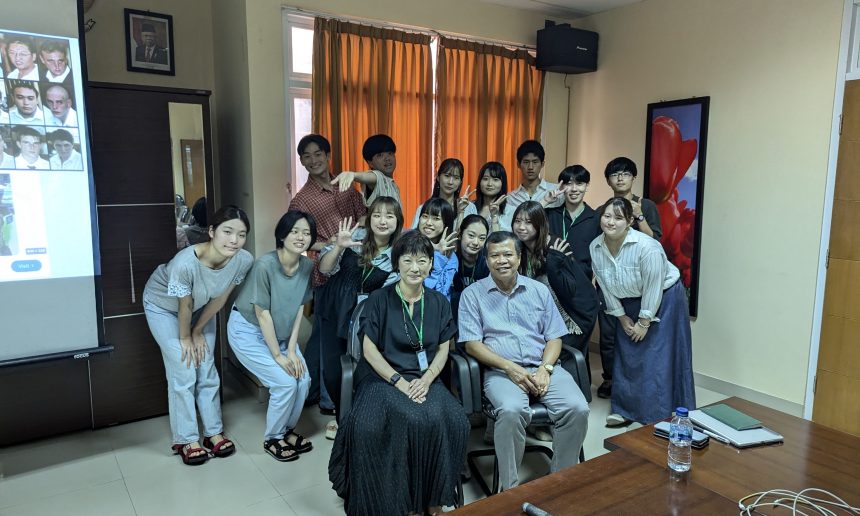
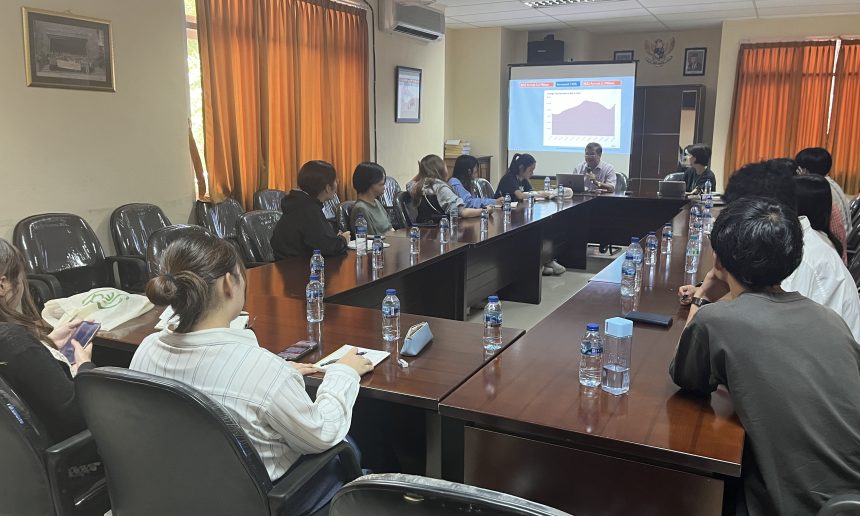
Participants had the opportunity to listen to a public lecture on the development of tourism in Bali. This short lecture was given by Prof. I Nyoman Darma Putra, a lecturer and professor at the Faculty of Cultural Sciences, Udayana University. The material began by explaining the Tri Hita Karana philosophy which is included in all aspects of the life of the Balinese Hindu community. Bali, like other world tourist destinations, has often experienced disruptions, threats, and natural disasters. However, behind all these incidents, Bali always recovers quickly. When Mount Agung was active and on alert, the Hindu community made offerings to pray that the eruption would not cause many casualties and would not cause great damage. The material talked more about the efforts made by the Balinese community to be able to restore tourism quickly and more sustainably. The major disruption that weakened the tourism sector in Bali and disrupted the view that Bali was the Island of Paradise was when the Bali Bombing I (2002) and II (2005) terror attacks were carried out by extremist and radical groups. The number of tourists dropped drastically due to the terror attacks and destroyed the world’s view that Bali was a peaceful and serene paradise. However, tourism in Bali tends to recover quickly from the incident. Many global parties have helped Bali and Indonesia to combat terrorism, including helping to identify victims and find suspects. In addition, there are many rituals carried out by the community to maintain and create harmony in life based on Tri Hita Karana.
The world’s support for Bali is very large for the recovery of tourism in Bali and in 2010 with the launch of the film Eat, Pray, Love starring Julia Roberts which took Bali as one of its filming locations, Bali became even better known and many people were interested in visiting Bali again. Bali’s popularity as a tourist destination began around 1930 with the film Goona-Goona which tells the story of a prince who falls in love with a girl from the common people and the film Bali: The Last Paradise. These films were quite popular in Hollywood at that time. A Scottish-American woman named Muriel Stuart Walker watched the film Bali: The Last Paradise and decided to move to Bali. Muriel was later adopted by the King of Klungkung and changed her name to Ketut Tantri. Ketut’s most famous work is Revolusi di Nusa Damai which has been translated into various languages. He also helped the Indonesian people fight for their independence. In 2015, the number of foreign tourists jumped sharply from 1.3 million in 2005 to 4.01 million. Domestic tourists were recorded at 8 million, so that the total number of tourists visiting Bali was 12 million, almost 3 times the total population of Bali. In 2018 – 2022, Bali tourism was again shaken by the eruption of Mount Agung and the Covid-2019 pandemic. Then in 2022, the film Ticket to Paradise was released, again starring Julia Roberts and paired with George Clooney. This film is set on the island of Bali, but unfortunately due to the Covid-19 pandemic, the filming location was carried out on the island of Queensland which was originally planned on Ceningan Island and Nusa Penida Island. Economic growth during the pandemic in Bali experienced minus 9.31%, indicating that the Balinese economy experienced significant paralysis. An anomaly actually occurred in Kintamani during the Covid-19 pandemic, when tourist areas such as Kuta, Ubud, and others experienced a decline in the number of tourists, the Kintamani area actually developed with the proliferation of various coffee shops and restaurants selling panoramic views of Mount Batur. Every weekend, visitors to each of these restaurants are always busy. UNESCO’s recognition of several Balinese cultures also increases the pride of the community and many tourists are interested in learning about these cultures such as Subak in Jatiluwih.
In 2023, the number of foreign tourists visiting Bali will increase drastically, reaching an increase of 114%. However, unfortunately, the quality of tourists visiting Bali is decreasing with many cases of harassment of holy places in Bali and other violations of the law. One of the questions from the participants was what efforts can be made when fewer people are interested in working as farmers and many are selling their land to be built into tourism facilities. According to Prof. Darma, this issue has become a vicious circle because the price of basic materials for farming such as fertilizer and seeds is getting higher while the profits are not much so that many take shortcuts by selling their land. Young people are also more interested in working in clean-jobs such as working in offices. However, there have been many movements carried out by various levels of society not to sell their land but only to rent it out. Development in Bali is currently increasingly massive, many investors are entering Bali bringing capitalist ideology by carrying out maximum exploitation. The problem of waste and traffic jams caused by over tourism in Bali has also been widely reported in various international media. One of the efforts made to maintain Balinese wisdom is by enforcing regulations regarding buildings that may not exceed the height of a coconut tree or above 15 meters.
Day Ten Activities – September 11, 2024
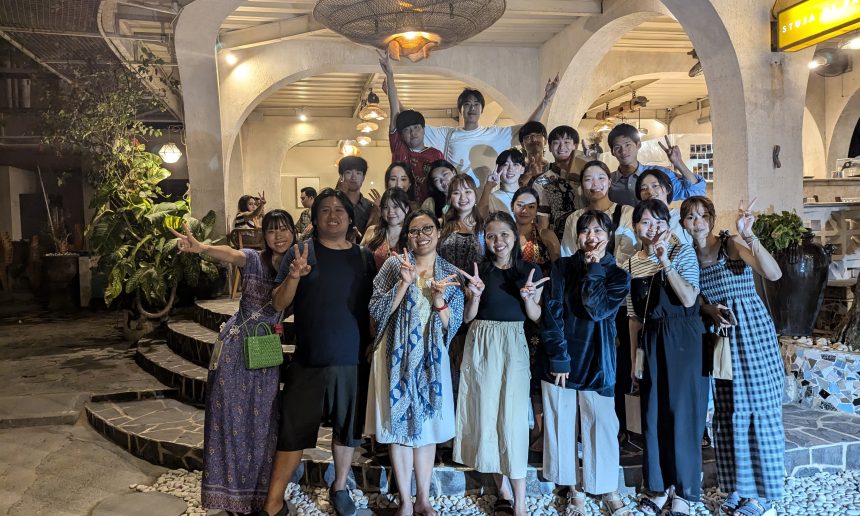
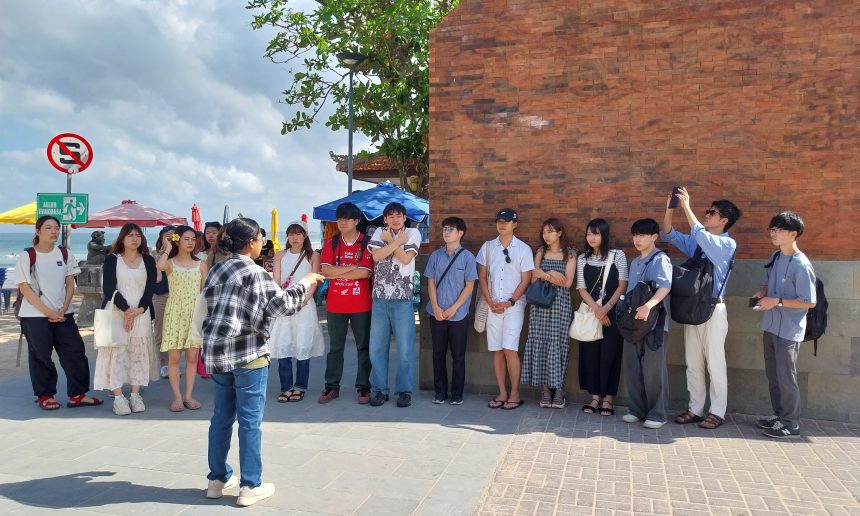
On the last day, students visited the Kuta area to see an overview of over tourism and tourism growth in the gateway area of Bali Island. Students were given the freedom to visit tourist spots in Kuta such as traditional markets, the Bali Bombing humanitarian monument, malls, beaches, and others. In the afternoon, students and the JED team held a farewell party together, participants gave their impressions and messages about the activities that had been carried out so far. The impressions and messages from the students were:
Kokoro: There is a lot that we can learn from everyday life in the villages in Bali. I am very interested in coffee plantations and subak. The locals are very kind and can accept us even though we are hampered by language differences. Staying in Pedawa was very memorable.
Tsubasa Yonekura: I learned a lot about the unique culture and ceremonies in Bali, especially related to cremation or death ceremonies whose customs are very different from those in Japan. Being able to learn Balinese dance, pedaling a pedahu, and making canang was very memorable. Overtourism and changes that occur in traditional villages are issues that must be considered.
Maho Takahashi: The most interesting thing for me was during the discussion in Tamblingan. Since the forest became a state forest, the sacredness of the area has decreased and disappeared.
Juntaro Iwai: In addition to being able to visit tourist areas, this time we were also able to visit remote areas. This gave us an idea of the activities of local residents and the problems faced in the midst of massive tourism development. After interacting with people who have very different cultures, I was able to be more open and leave behind the stereotypes I had before. JED’s deep understanding of Balinese culture, customs and situations and its efforts to bridge the gap between villages and the tourism industry can be seen as one of the efforts to achieve a sustainable world.
Honoka Kamimaru: The most memorable thing for me was when I experienced “Bali Belly”. Thank you to the JED team who accompanied me the entire time and helped me recover. Through this program, I was able to see Bali which has a lot of culture, nature and friendly people. Bali has become one of my favorite places and I was able to have a very memorable experience.
Kazuki Utsugi: I learned a lot about the development of tourism in Bali and its traditional rituals. I am very interested in the impact of the tourism industry, especially in remote areas. I went to Pedawa and was able to interact with the local community. I was very happy because I could do research directly, not only through books or the internet. This experience will be my guide in the future.
Rintaro: One of the most valuable things is being able to see the enthusiasm of young people in Bali and JED members who understand the conditions of the village and try to overcome the issues and problems in their community. Next, I want to write a thesis related to community-based tourism in Bali.
Ayane Itoh: I learned a lot about subak, how to harvest coffee, rituals, village life, the history of Balinese tourism and so on. I am very interested in learning about the culture in Bali. I am very impressed that people in the village still hold on to their traditions and culture.
Ayaka Matsumoto: I was able to learn about traditional Balinese culture and the impact of tourism. Staying overnight in the village was a unique and very memorable experience.
The ten-day experience in Bali opened the students’ horizons to other impacts of the tourism industry. Amidst the hustle and bustle of mass tourism in Bali, the carrying capacity and environmental capacity of Bali are increasingly being eroded. The massive exploitation that is currently occurring is causing environmental, cultural, and customary problems. Ecotourism activities carried out in JED’s assisted villages are alternative tourism that we want to offer to provide a true picture of Bali and emphasize that tourism is only a bonus to the behavior that has been carried out so far. In addition, ecotourism gives full sovereignty to the community to determine the future of their culture and environment and to achieve a more sustainable and regenerative life.
Thank you for following our journey and reflection on the condition of tourism in Bali.